Online and in person therapy sessions in English - Turin, Italy
Let's talk. Let's listen.
Anxiety, relationship difficulties, uncertainty, a sense of emptiness, or simply the feeling that something is not right.
Whatever brings you here, it deserves to be taken seriously and treated with care.
Therapy can offer a space to speak freely, reflect on your experiences, and better understand what is happening in your life, creating the possibility for meaningful change.

What brings people to therapy?
People seek therapy for many different reasons.
Sometimes it is because of anxiety, sadness, relationship difficulties, problems at work, or moments of crisis.
Sometimes it is because they find themselves facing the same situations over and over again, despite their efforts to change.
Sometimes there is a feeling of emptiness, a persistent dissatisfaction, or the sense that something in life is no longer working.
And sometimes there is no clear explanation at all—only the feeling that something is not right.
Whatever the reason, therapy offers a space to explore these experiences, understand them more fully, and gradually discover what else might be possible.
My approach is psychoanalytically informed and guided by the belief that our difficulties deserve to be understood, not simply managed. Anxiety, sadness, relationship problems, periods of uncertainty, and other forms of suffering are important in themselves, but they can also tell us something about the way we live, relate to others, and relate to ourselves.
I believe that my role as a psychologist is not to tell you how you should live, provide ready-made answers, or judge the choices you make. Instead, I offer a space where what is troubling you can be spoken about, listened to, and explored with care. We will talk. We will raise questions. We will create hypotheses. We will deconstruct and reconstruct and, through this process, find new answers, new meanings, new ways forward.
Change does not and should not have to come from following a formula or achieving someone else's idea of how life should be lived. It can emerge gradually through a deeper understanding of our history, circumstances, choices, conflicts, and desires. Through conversation, reflection, and careful listening, therapy can bring new perspectives to recurring difficulties, create room for questions that have not yet been fully articulated, and open new possibilities.
How I work
People often imagine psychologists as experts who know the answers to their questions and the meanings of their symptoms, their struggles, and their dreams. For me, the reality is quite different. Therapy begins with curiosity, careful listening, and a willingness to explore questions without rushing toward answers. I don't assume that I know the truth of someone's experience beforehand, even if I have encountered something similar before. Each person brings their own history, relationships, conflicts, and ways of experiencing the world.
Over the past thirteen years of clinical work, I have learned to listen not only to what brings someone to therapy, but to how they experience it, what meaning it carries in their life, and what it may reveal about the way they relate to themselves and to others. These are questions that continue to interest me profoundly.
My role is not to tell people how they should live, nor to judge the choices they make. Instead, I aim to offer a space where questions can be explored and struggles can be spoken about openly. Through this process, new possibilities can gradually emerge, not from answers that a psychologist already holds, but from a deeper understanding of yourself.
About me


Therapy for Expats and International Clients
Moving to another country can be exciting and full of possibilities. It can also be far more difficult than we expected.
Alongside the opportunities, many people experience loneliness, homesickness, anxiety, relationship difficulties, or the feeling of no longer knowing exactly where they belong. Building a new life often means leaving behind familiar routines, support networks, and ways of understanding oneself.
Sometimes these difficulties appear immediately. Sometimes they emerge months or even years later, even when life seems to be going well from the outside.
Having moved from Brazil to Italy and rebuilt my professional life in a new country, I know that adapting to a different culture involves much more than learning a language or navigating bureaucracy. It often raises questions about identity, belonging, relationships, work, and what we want from our lives.
Therapy can offer a space to think about these experiences, whether they are directly related to life abroad or simply taking place within the context of it.
I work with expats and international clients in Italian, English, and Portuguese, both online and in person in Turin.
Practical Information
Where do sessions take place?
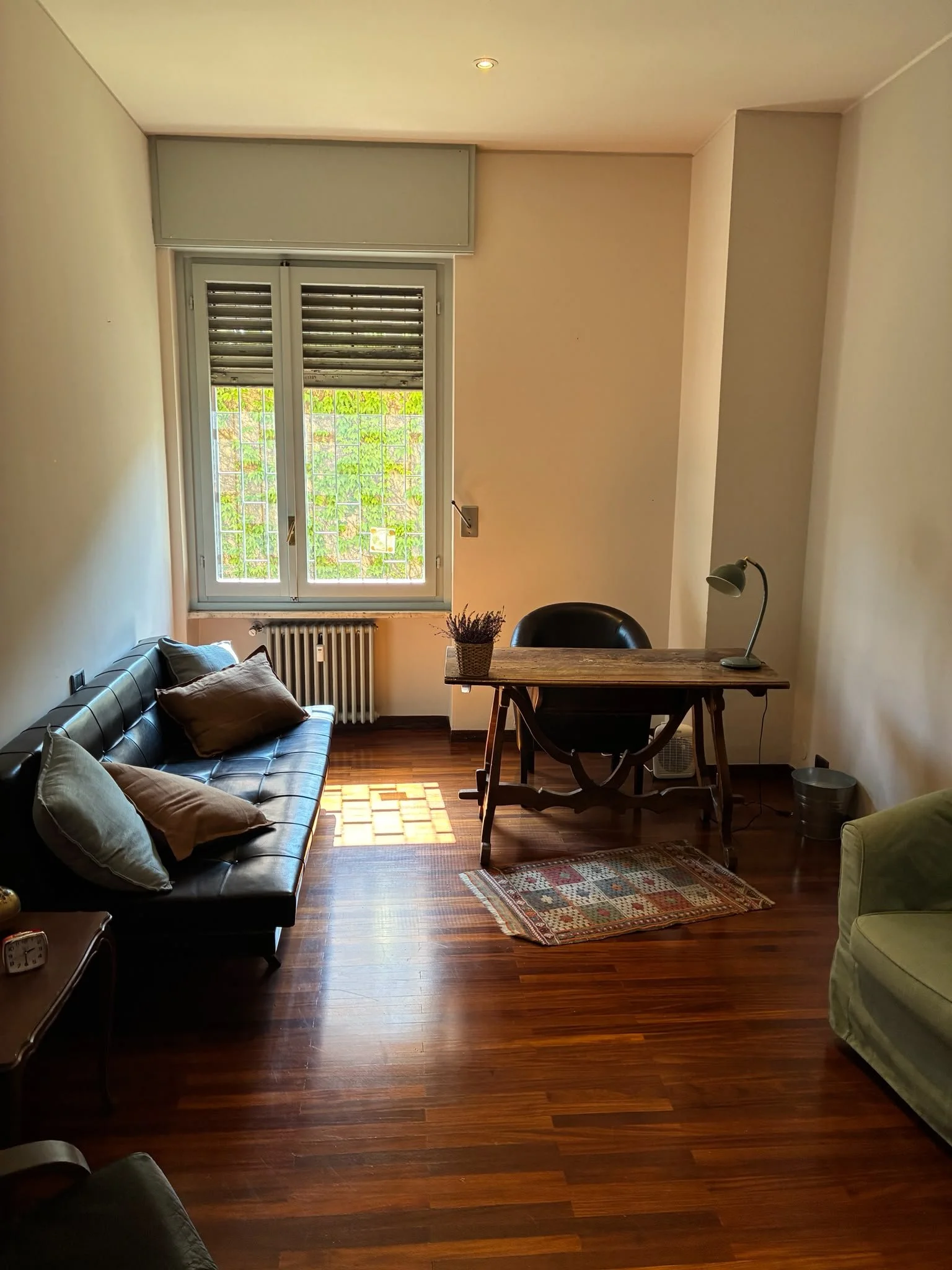
I see patients at my studio in Torino Centro, at Via San Pio V, 36, as well as online.
Who do you work with?
Adults and adolescents.
Which languages do you offer therapy in?
Italian, English, and Portuguese.
How long does are the sessions?
Sessions usually last around 50 minutes.
How often do sessions take place?
Sessions are usually weekly, although frequency can vary according to your needs and circumstances and can be discussed during our first meetings.
How much does a session cost?
The price per session is €70.
How do I get started?
You can contact me by phone, WhatsApp, email, or through the contact form to arrange an initial consultation.
If you feel that you are not prepared for a first session, or that you do not know what to say, that is perfectly alright.
You do not need to prepare anything in advance, organize your thoughts, or arrive with a clear explanation of what is wrong. Many people begin therapy with little more than the feeling that something is not right, and that is enough.
The first session is an opportunity to talk. You are welcome to talk about whatever feels important to you: a specific difficulty, a recurring concern, a recent event, or simply the thoughts that have been occupying your mind. I will listen carefully, ask questions, and help us begin building a picture of your experiences and concerns.
The goal of this first conversation is not to reach immediate conclusions. It is to create a space where we can start exploring what is troubling you, whether therapy seems likely to be helpful, and whether working together feels like a good fit.
At the end of the session, there will be time for any questions you may have, as well as for discussing practical matters such as frequency, availability, and how future sessions might work.
Often, a first session opens up questions and reflections that deserve further exploration. For this reason, I will usually suggest a second meeting to make the most of this process and further explore whichever themes may have emerged in our first conversation.
What happens in the first session?
Contact
If you are considering therapy or if you have any questions, I'd be happy to hear from you. Feel free to call, or to send me a message on Whatsapp or via the form below.